
Why Test Your Water Before Buying a Filtration System? City vs. Well Water Explained
If you are thinking about upgrading your home’s water, one of the smartest first steps is not choosing a filter. It is testing your water.
Understanding why to test your water before buying a filtration system can save you time, money, and a lot of guesswork. It also helps you choose a treatment strategy that actually fits your home, your water source, and your health priorities.
At Safer H2O, we believe clean water decisions should be based on real data, not assumptions. That is why we recommend starting with a certified home water quality test before selecting a filtration system. It gives you a clearer picture of what is in your water and helps you determine whether a solution like the Nexxus Smart Whole Home Filtration System is the right fit, and which filter pack makes the most sense.
Why Testing Your Water Matters
Two homes in the same town can have very different water concerns. Even if your water looks clear and tastes acceptable, that does not tell you everything you need to know.
A proper water test helps you:
Identify the contaminants actually present
Water can contain a range of contaminants, including heavy metals, minerals, VOCs, nitrates, and in some cases bacteria. A certified test helps identify what is really there instead of relying on guesswork.
Choose the right filtration system
Different filtration systems are built to address different problems. Some are better for chlorine and VOCs. Others are designed for heavy metals, PFAS, sediment, or scale. Testing helps you match the right solution to your actual water.
Avoid under-treating or over-treating
Without testing, it is easy to buy a system that does not address your real concerns, or to pay for treatment you do not actually need. Water data gives you a cleaner, more efficient path forward.
Protect health more intentionally
Certain contaminants matter more depending on your home. Lead, arsenic, nitrate, E. coli, and coliform bacteria are not all handled the same way, and not all belong in the same type of test. If you have children, older plumbing, or a private well, testing becomes even more important.
Build a smarter long-term plan
Testing gives you a baseline. That baseline helps you make better decisions now and more informed upgrades later, whether that means a SimpleLab test kit, a targeted point-of-use filter, or a whole-home system like the Nexxus.
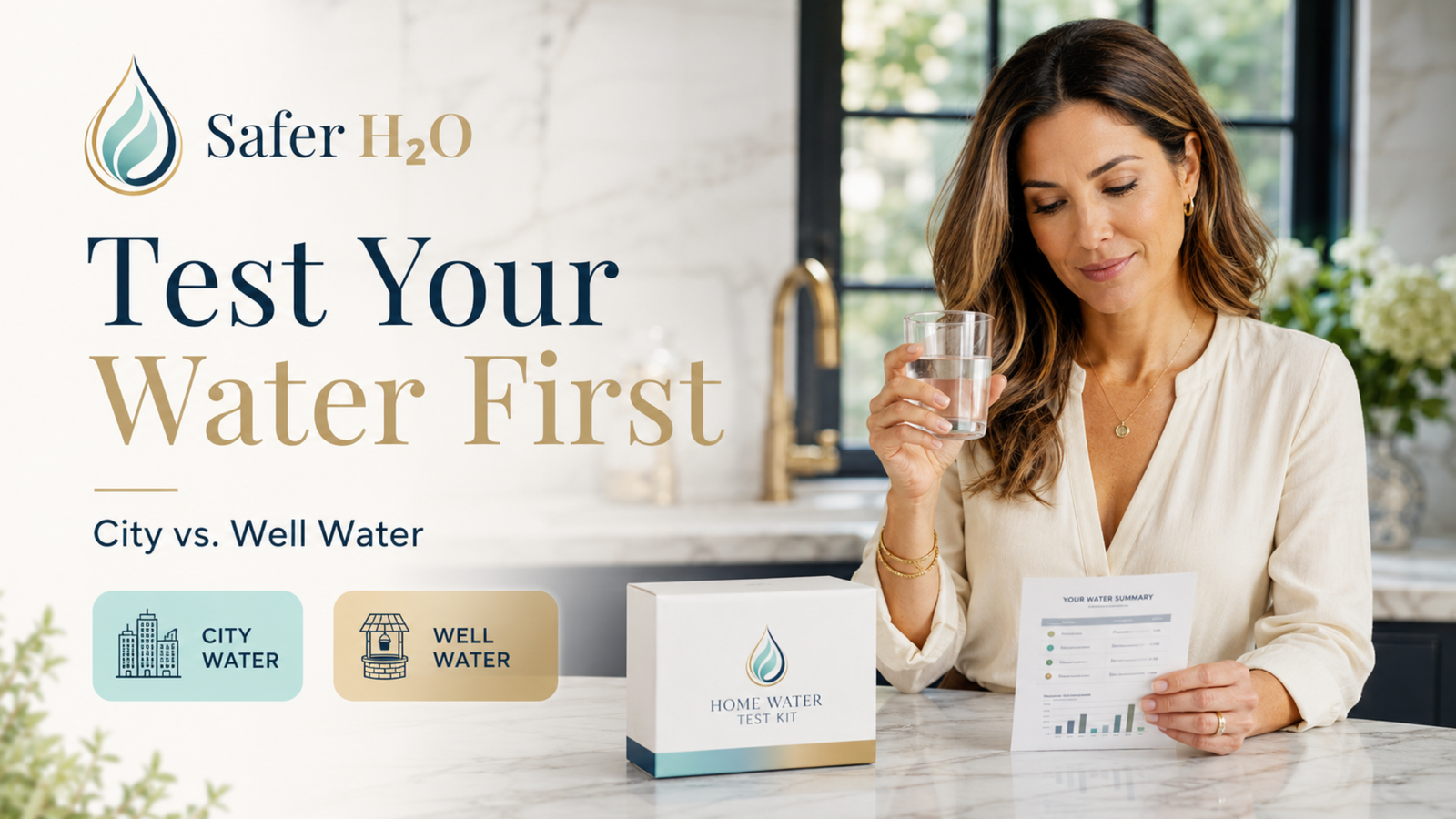
City Water vs. Well Water: Why They Need Different Tests
One of the biggest mistakes homeowners make is assuming all water tests are basically the same. They are not.
The right test depends heavily on whether your home is served by city water or a private well.
If You Have City Water
A city water test kit is designed for drinking water that comes from a public utility. This kind of test is ideal for homeowners who want a baseline understanding of common concerns in municipal water, especially if they are worried about older pipes, lead, or chemical contaminants.
A city water test is especially helpful if you:
- are connected to a public water utility
- live in a home built before 1986
- are served by older infrastructure
- have young children or other vulnerable individuals in the home
- are mainly concerned about metals, plumbing-related issues, and other inorganics
What a city water test looks for
A certified city water test can analyze for:
- pH
- total dissolved solids (TDS)
- hardness
- heavy metals
- minerals
- nitrate
- fluoride
- and other common inorganics
This kind of test is often the right starting point when your concerns center around:
- lead from older plumbing
- metals from pipes or distribution lines
- VOC-related chemical concerns
- overall baseline quality from utility-supplied water
Our recommended city water testing option uses certified lab testing, includes free shipping both ways, offers a fast turnaround, and provides easy-to-read, actionable results.
If You Have Well Water
A well water test kit needs to do more than what a typical city water test does.
Why? Because well water comes from groundwater, not a public utility treatment plant. That means the risks can be different, and one of the biggest differences is bacteria testing.
If you are on a private well, it is not enough to test only for metals and inorganics. You should also test for coliform bacteria and E. coli, because these can indicate contamination from surface runoff, septic issues, or other environmental sources.
A well water test is especially important if you:
- use a private or shared well
- have a septic tank near the well
- are concerned about agricultural runoff
- want an annual water checkup
- have children or vulnerable family members in the home
What a well water test should include
A proper well water test should analyze for:
- heavy metals
- minerals
- hardness
- turbidity
- silica
- nitrate
- nitrite
- total coliform bacteria
- E. coli
That bacterial component is a major reason city and well water require different tests.
Why bacteria testing matters more for wells
City water is treated at the utility level before it reaches your home. That does not mean it is perfect, but it does mean bacterial contamination is not usually the first thing most municipal baseline tests are built around.
Well water is different. Since it comes from groundwater sources and is not going through the same public treatment process, bacteria becomes a much more important concern to rule out. If your well is near septic infrastructure or exposed to runoff, bacterial testing is not optional. It is essential.
So if you are on a well, a home water quality test that does not include bacteria is incomplete.
Why Testing First Helps You Choose the Right Filtration System
This is where testing becomes more than just informative. It becomes practical.
There are many different filtration technologies out there, and not all of them solve the same problem. Some systems target chlorine taste and odor. Some focus on lead and other heavy metals. Some are designed to address sediment, scale, or broader whole-home concerns.
Testing first helps answer key questions like:
- What contaminants are actually present?
- How serious are the levels?
- Is this mainly a plumbing issue, a source water issue, or both?
- Do you need broad whole-home protection or targeted point-of-use treatment?
- What kind of filter media makes the most sense?
Without those answers, many people end up shopping by fear, hype, or vague assumptions.
At Safer H2O, we prefer a better path: test first, then build the right solution.
Why a SimpleLab Water Test Is a Smart First Step
We recommend SimpleLab mail-to-lab water tests because they make the process straightforward and trustworthy.
These test kits offer:
- certified lab testing
- fast turnaround
- free shipping both ways
- clear digital results
- unbiased treatment guidance
That matters because most homeowners do not just want numbers. They want clarity.
A SimpleLab test gives you a baseline you can actually use. From there, you can make a more informed decision about whether you need targeted filtration, broader treatment, or a whole-home system.
How Testing Connects to the Nexxus Smart Whole Home Filtration System
Once you know what is in your water, you can make a better filtration decision.
For many homeowners, especially those dealing with multiple concerns across the home, a whole-home solution makes more sense than trying to manage water one faucet at a time.
That is where the Nexxus Smart Whole Home Filtration System comes in.
The Nexxus is designed to deliver filtered water throughout the home while giving you more visibility and control than traditional systems. It is especially valuable when your water test shows you need a more intentional, whole-house strategy rather than a partial fix.
Why Nexxus is a smart next step
- whole-home coverage for showers, sinks, and appliances
- smart monitoring and alerts based on real usage
- modular filter packs tailored to your water conditions
- high-flow performance without bulky tanks
- a cleaner, more modern approach to long-term filtration
And because water quality can vary by location, plumbing, and source, testing first helps determine which Nexxus configuration is best for your home.
Common Reasons Homeowners Should Test Their Water
Here are some of the most common situations where testing makes sense:
You have older plumbing
If your home was built before 1986, or you know your area has aging infrastructure, testing for lead and other metals is a smart move.
You have young children
When young children are in the home, many families want a clearer understanding of what is in their drinking water and whether stronger protection is worth it.
You are on a private well
If you have a well, you need a test that includes bacteria, especially total coliform and E. coli.
You are worried about runoff or environmental exposure
Homes near agricultural activity, septic systems, or groundwater vulnerability zones may need more than a basic screening.
You want to stop guessing
Sometimes the reason is simple: you want real answers. That alone is a good enough reason to test.
Test First. Then Treat Smarter.
The best water filtration system is not the one with the loudest claims. It is the one that fits your actual water.
That is why testing comes first.
A city water test kit can help identify common municipal water concerns like lead, metals, and inorganics. A well water test kit goes further by checking for bacteria like E. coli and total coliform, which are critical to rule out in groundwater.
Once you know what is in your water, you can move forward with confidence.
At Safer H2O, that often means starting with a SimpleLab water test and then using those results to guide the next step, whether that is targeted advice, a tailored treatment recommendation, or a system like the Nexxus Smart Whole Home Filtration System.
Ready to Understand Your Water?
If you are serious about improving your water, start with data.
Choose the right home water quality test for your home:
- City water test for public utility water
- Well water test for groundwater, including bacteria testing
From there, we can help you understand your results and choose the right path forward.
Because cleaner water starts with clarity.